

Brand identity vs. brand strategy — these two terms get used interchangeably a lot, which causes real confusion when a founder is trying to figure out what to actually commission. They’re related, but they’re not the same thing, and getting the order right saves both time and money.
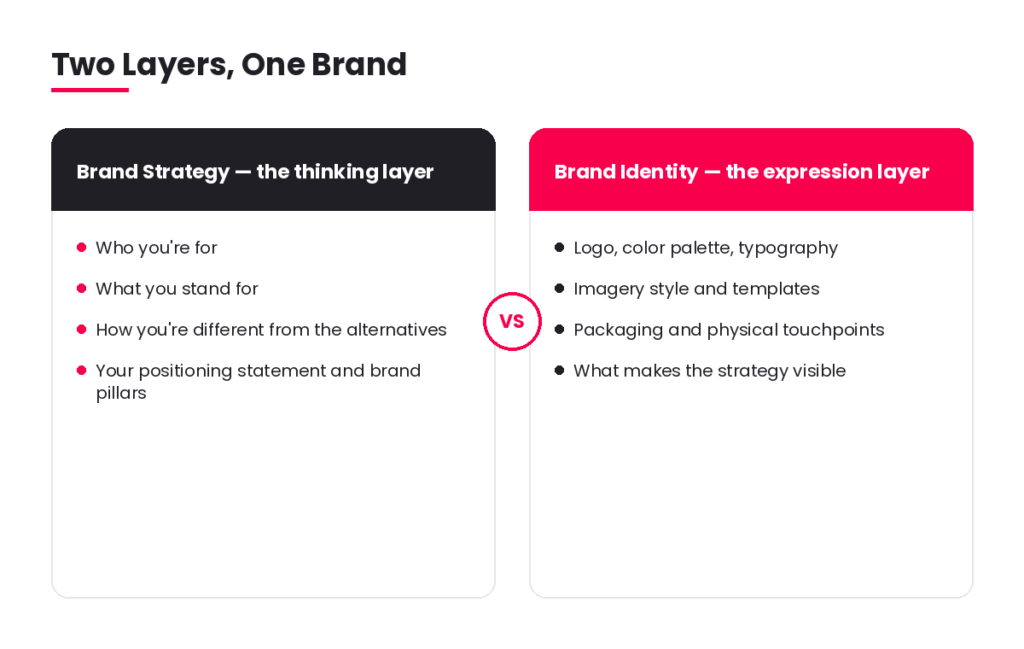
Brand strategy is the thinking layer: who you’re for, what you stand for, how you’re different from the alternatives your customer could choose instead, and what tone of voice and personality should run through everything you make. It’s mostly words and decisions, not visuals, a positioning statement, a set of brand pillars, a point of view on the market.
Brand identity is the expression layer: the logo, color palette, typography, imagery style, packaging, and templates that make the strategy visible and consistent everywhere your business shows up. It’s what people actually see and remember.
The reason order matters: an identity built before the strategy is settled tends to look good in isolation and then fall apart under pressure, a new product line, a new market, a pitch deck for investors, because there was never a clear underlying logic to extend. Teams end up redesigning within 12 to 18 months, which costs more in total than doing the strategy work upfront would have.
In practice, most early-stage founders don’t need a six-week strategy engagement before they can get a logo. What they need is a compressed version: a clear read on their audience and positioning, done in days rather than weeks, that then directly informs the identity work. That’s the model we use for early-stage clients, enough strategic grounding to make the identity decisions defensible, without turning a startup’s first brand project into a multi-month process.
If you’re further along, raising a round, entering a new market, or noticing your current brand doesn’t match how the business has actually grown, that’s usually the signal to invest in a fuller strategy pass before touching the visual identity again.